Treated lumber is not one product. The retention level stamped on the end tag tells you where a board is allowed to live, and using the wrong one is the most common reason a deck frame fails early.
Above ground versus ground contact
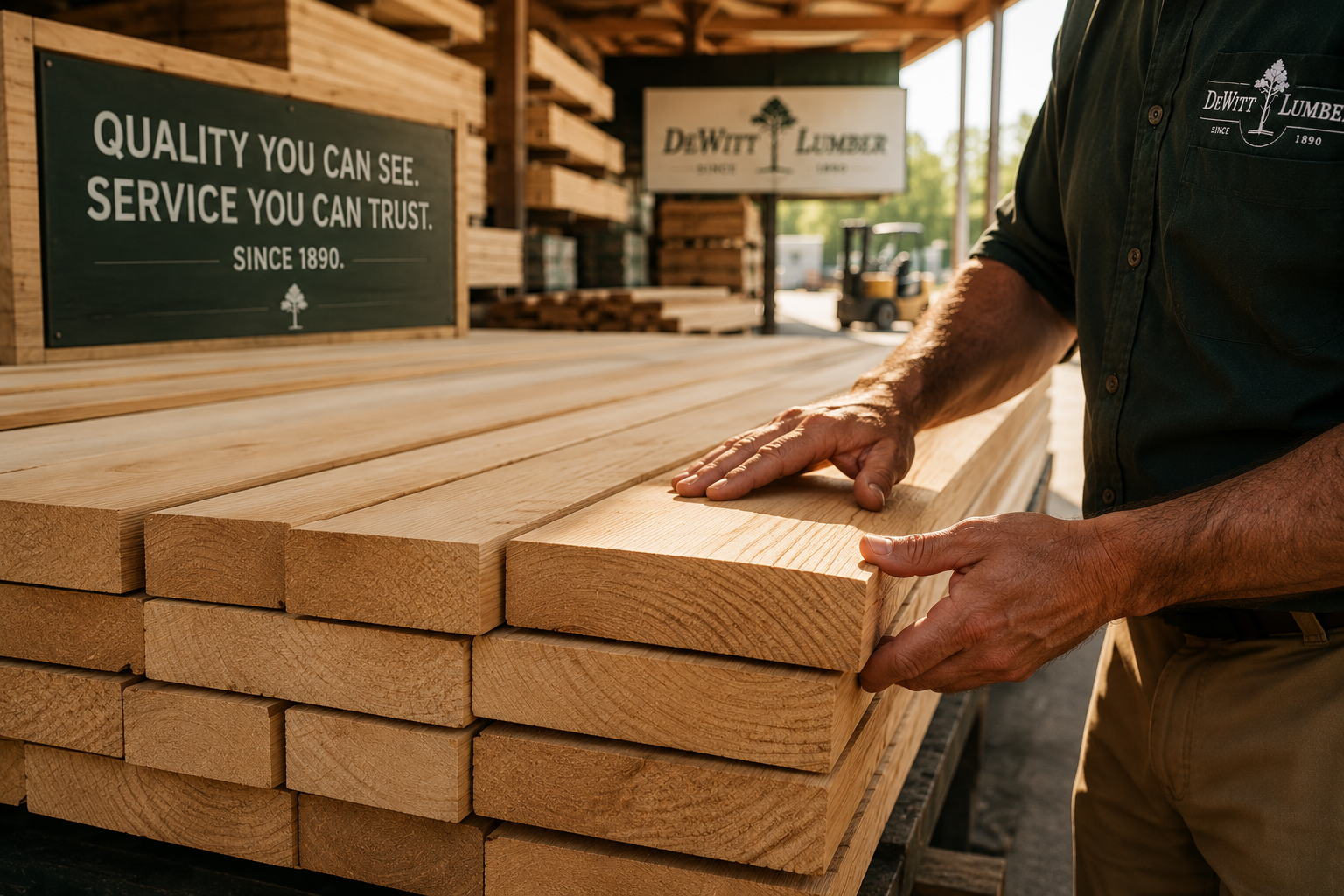
Above-ground treatment is for material that drains and dries — deck boards, railing, and framing that is well off the soil. Ground contact treatment carries more preservative and is required for posts, joists close to grade, and anything buried, embedded in concrete, or sitting where water lingers.
Fasteners have to match
Modern copper-based treatments corrode plain steel quickly. Use hot-dip galvanized or stainless fasteners and connectors rated for treated lumber, and keep the connector coating and the fastener coating in the same family.
Let it dry before you finish it
Freshly treated stock carries a lot of moisture. Let it acclimate before staining or sealing, and expect some movement through the first Michigan winter. Fastening tight and flat at install gives it less room to misbehave later.
Talk it through with us
Bring your plans, sketches, or photos to any of our four Central Michigan yards. We will walk the options with you, pull real samples, and put together a material list you can build from. Estimating is free for any project.